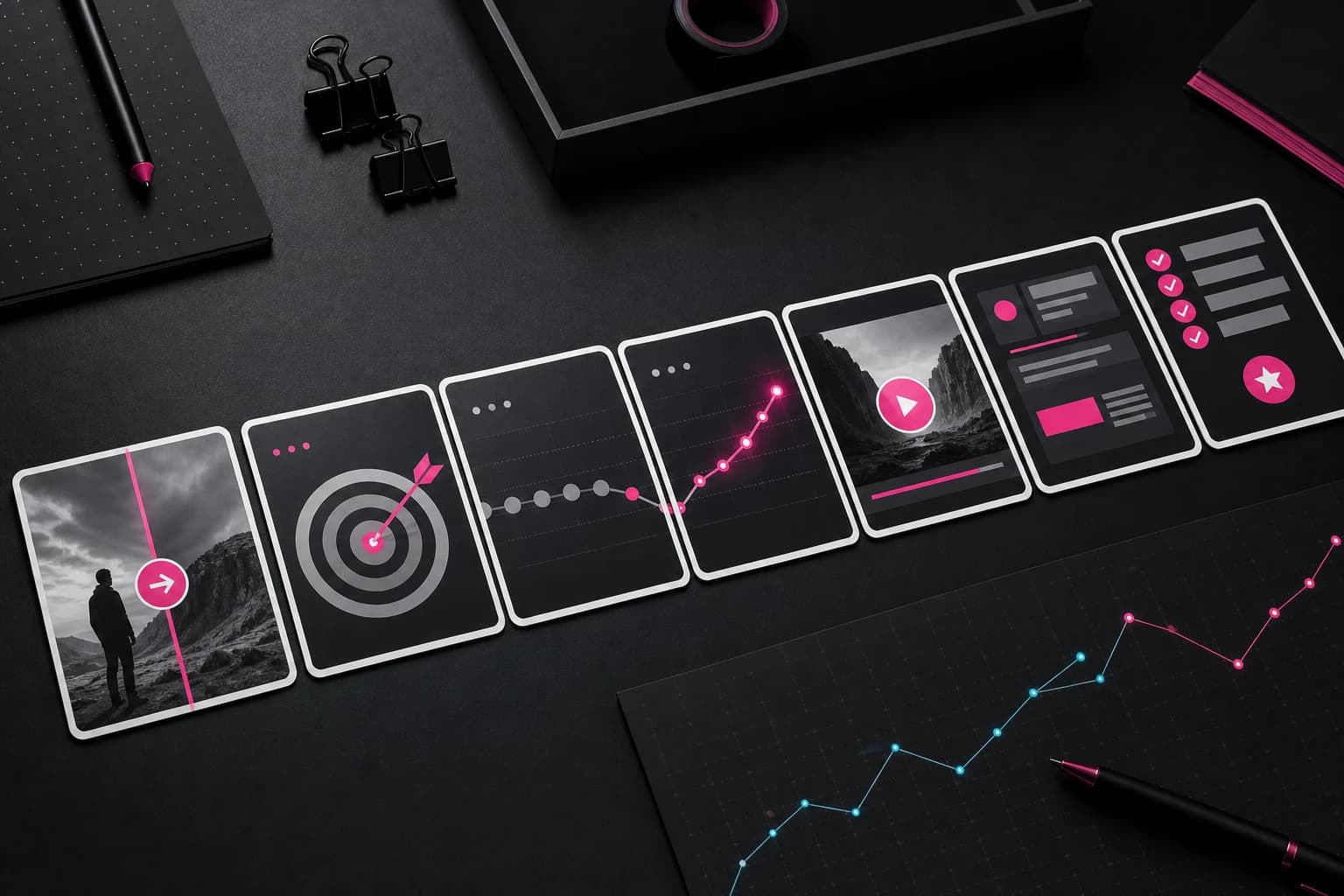
Stories Factory
Cinematic survival short
PKT-STORIES-96 · V1
Lost in the Desert: When Your Body Turns Against You
A dark cinematic survival Short about what happens inside your body when you are lost in the desert.
Format
YouTube Shorts
Structure
12 beats
Visuals
12 frames
Production
5 cues
A complete 60-second dark-cinematic Shorts packet with twelve timed beats.
The script uses a clear internal timeline so the viewer can feel the body breakdown escalating.
Each beat has its own visual frame, anatomy cue, and edit check instead of generic scene coverage.
This copies the production setup into your builder. It does not generate output or consume a build until you press Build.
Inside the packet
Everything needed to move from idea to release.
Sample content is clearly labeled. It proves the product structure and production depth; it is not presented as a customer result or performance guarantee.
Creative brief
A 60-second vertical survival Short for viewers who like human limits, extreme body conditions, and dark cinematic anatomy storytelling. The angle is not 'the desert is hot.' It is: dehydration turns the body into the threat. The packet tracks one visible physical failure every five seconds, keeps the skeleton character readable, and uses the final line to make the viewer rewatch the escalation.
Opening options
4 options
What if the desert did not kill you first - your own body did?
The scariest part of dehydration is not thirst. It is the bad decisions that come after.
At first you sweat. Then your body starts choosing what it can afford to lose.
The desert does not need a monster. It waits for your cooling system to fail.
Paste-ready narration
VOICEOVER - paste-ready What if the desert did not kill you first... Your own body did? 30 minutes in: Your mouth dries out. Sweat pours off you. Your blood volume starts dropping. The sun is not just heating your skin. It is breaking your cooling system. 2 hours in: Your muscles cramp. Your heart works harder to move less fluid. Your brain starts making bad decisions feel smart. That shadow looks close. It is not. 6 hours in: Your central nervous system starts misfiring. Hands shake. Vision pulses. Your body is saving water by giving up control. Then comes the worst sign. You stop sweating. No sweat means no cooling. No cooling means your core temperature keeps climbing. The desert did not beat you with teeth. It made your body choose what fails first.
Timed beats
12 beats
0-5s - Hook: skeleton anatomy character alone on a white-hot desert road, heat shimmer swallowing the horizon.
5-10s - Mouth dries: cracked lips, dry tongue, and the first hard swallow under brutal sun.
10-15s - Sweat spike: sweat flashes off skin as the cooling system starts losing the fight.
15-20s - Blood thickens: simple internal flow overlay tightens around the chest and neck.
20-25s - First cramps: calf and hand lock up while the character tries to keep walking.
25-30s - Heart strain: pulse graphic accelerates while each step covers less ground.
30-35s - Bad decision beat: false shade appears close, but the road bends away in heat haze.
35-40s - Nervous-system glitch: red pulse lines flicker across spine and skull.
40-45s - Hands shake: close shot of trembling fingers dropping a nearly empty bottle.
45-50s - Vision pulse: frame tunnels and brightens as the desert sound thins out.
50-55s - The crash: the character stops sweating under overhead sun.
55-60s - Final wide: tiny figure in the desert, caption hit: 'Your body chooses what fails first.'
Visual direction
12 frames
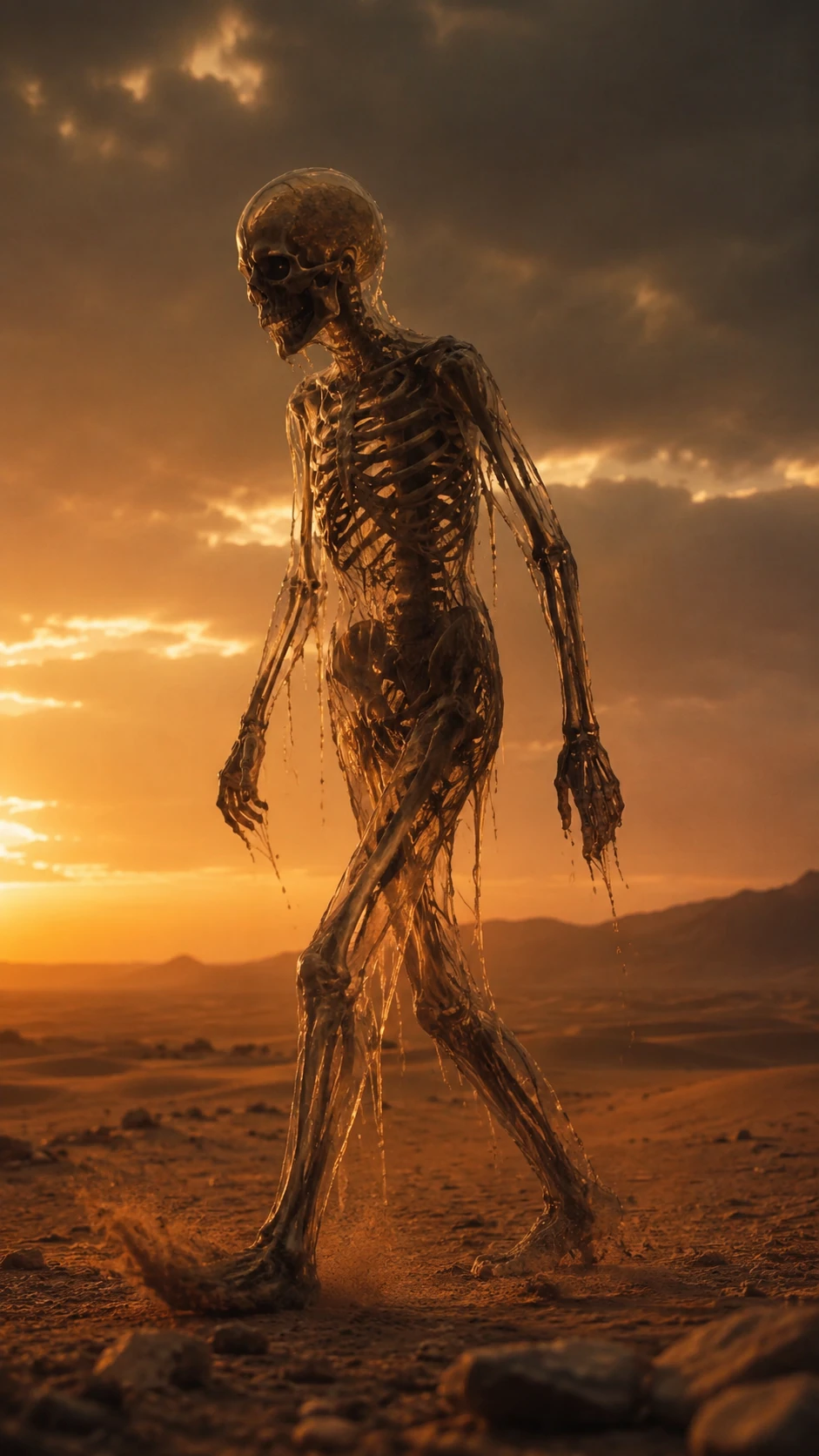
Frame 01: 9:16 low wide desert road, expressive anatomy skeleton character centered, heat shimmer, hard noon sun, empty horizon, cinematic survival tone.
Frame 02: extreme close-up, cracked lips and dry jawline, pale dust on face, white-hot background blown slightly, one clean caption-safe area.
Frame 03: sweat beads evaporating off shoulder and skull edge, tiny vapor shimmer, harsh rim light, minimal desert texture.
Frame 04: chest-level anatomy overlay, darker blood-flow lines tightening, character still upright but tense, no clutter behind the body.
Frame 05: hand and calf cramp insert, fingers curling around an empty bottle, sand grains sharp in foreground.
Frame 06: heart-strain frame, red pulse ring around rib cage, character taking one heavy step, camera slightly below eye line.
Frame 07: mirage frame, false patch of shade bends in the distance, road perspective warped by heat, character reaching toward it.
Frame 08: nervous-system frame, spine and skull pulse lines flicker red, background darkens orange, readable silhouette.
Frame 09: trembling-hand close-up, bottle slipping, dust catching the light, shallow focus and caption-safe top third.
Frame 10: vision-pulse frame, tunnel vignette, overexposed sun, character blurred at edges but face/body language readable.
Frame 11: no-sweat crash frame, character kneeling, skin/bone surface dry, internal heat shown as a simple red core.
Frame 12: final wide shot, tiny character against massive desert, long shadow, bold empty space for final caption.
Motion / FX Pass
5 cues
0-5s: slow push through heat haze; let the skeleton enter with no title card before the hook lands.
10-20s: sweat vapor and blood-flow overlays should appear for one beat only, then cut before they feel like medical wallpaper.
25-40s: pulse graphics accelerate in two steps; add the nervous-system flicker only after the bad-decision mirage.
40-50s: use a short handheld shake on the bottle drop, then narrow the frame for the vision-pulse beat.
50-60s: remove ambient detail when sweating stops; hold the final wide long enough for the caption to read.
Edit pass
Runtime pass: keep twelve 5-second beats; no beat may carry more than one body change.
Caption pass: use only four timeline cards: 30 minutes, 2 hours, 6 hours, the crash.
Visual pass: every frame must show either desert pressure or internal body failure, never generic walking footage.
Overlay pass: anatomy graphics stay simple and readable at phone size; no busy medical diagrams.
Sound pass: start with wind and pulse, add tinnitus at the nervous-system beat, then thin the audio when sweating stops.
Ending pass: hold the final wide for the last line; do not add a subscribe CTA over the payoff.
Release sheet
Title
When the Desert Makes Your Body Turn Against You
Thumbnail
Tiny skeleton anatomy character on a white-hot desert road, red core heat glow, text: 'Your body turns first.'
Caption
Dehydration is not just thirst. It is your cooling system failing one decision at a time.
Hashtags
#survival #humanbody #shorts #cinematic
Pinned comment
Which warning sign would scare you first: cramps, bad decisions, shaking hands, or when sweating stops?
Inspect another format